Grateful for the Road That Led Here
A thank-you and personal reflection after being invited to talk about integrations, product work, and the experience that brought me to forward deployed engineering.
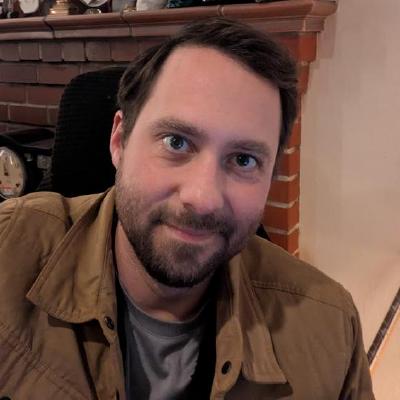 Giovanni Alvarez
I recently had the chance to speak with Jeff Magloire and Daniel Cai about my experience building integrations, working with product teams, and solving problems inside complicated production environments. They are researching ProductOS, a tool intended to help connect customer needs, product decisions, engineering work, documentation, and delivery.
I want to start by saying thank you.
Thank you for reaching out. Thank you for taking the time to listen. Thank you for asking questions that made me think about work I have been doing for years, often without having a clear name for it.
I went into the conversation expecting to talk about integrations. I did not expect to come away feeling so grateful for the road that brought me there.
A conversation that made me look back
It is easy to describe a career after the fact as if it were a plan. Mine was not.
I started by building custom applications and working with clients who needed something made, fixed, or explained. I learned by taking on work that was sometimes bigger than my experience at the time. I worked across different companies, products, and industries. I spent years building a hospitality platform from the ground up, working closely with a founder, customers, vendors, executives, and engineers.
Much of that work happened before I knew the term forward deployed engineer. I was doing discovery, building proofs of concept, explaining technical decisions, connecting systems, helping close deals, deploying software, and supporting it after the launch. I was often the person standing between what a customer needed and what the systems could actually do.
The title came later. The work came first.
The interview helped me see that more clearly. When I talked about legacy systems, undocumented APIs, version differences, production failures, and the slow process of finding the truth inside an unfamiliar environment, I was also describing the education my career gave me.
It was not a formal education. A lot of it had to be built on my own.
What it took to get here
There were many years when I had to figure things out without a clear path or a person standing over my shoulder to show me what to do next. I had to learn how to build companies, find customers, make promises carefully, deliver what I promised, and keep going when the work became more difficult than expected.
I had to learn technologies because a customer needed a solution, not because a course had been prepared for me. I had to understand systems by reading incomplete documentation, testing boundaries, looking at code, and asking questions that sometimes exposed how little anyone knew about the system as a whole.
There were times when doing it on my own felt empowering. There were other times when it was simply hard. Building something from the ground up can be lonely, especially when the people around you only see the finished product and not the years of uncertainty underneath it.
Still, that experience shaped me.
It taught me to be resourceful without pretending to know everything. It taught me to keep investigating when the answer was not obvious. It taught me that a working system is more than code. It has to make sense to the people using it, survive contact with production, and remain understandable when someone else has to support it.
Those lessons came from many places. Some came from success. Some came from mistakes. Some came from projects that took far longer than expected. Some came from having no choice but to learn the next thing and keep moving.
I am grateful for all of it, even the parts I would not choose to repeat.
What we talked about
During the interview, we talked about the friction that appears when engineers, architects, product managers, and business leaders each work from a different understanding of the same project.
We talked about technical documentation and the difficulty of integrating with systems that have been running for years. Sometimes the documentation is incomplete. Sometimes it describes another version. Sometimes the people who built the system are no longer available to explain why it behaves the way it does.
In those situations, the work becomes a form of investigation. You gather what exists, test what you can, compare the behavior against the written specifications, and build a clearer picture one piece at a time.
We also talked about AI agents and the work they may be able to take on. An agent can research documentation, compare products, organize notes, prepare an executive summary, or suggest priorities. That can remove a great deal of repetitive work.
It cannot remove responsibility.
The person who understands the customer, the company, the risks, and the consequences still has to make the final decision. That is the part I care about. I am interested in using AI to prepare better information, not in handing over judgment simply because the result looks polished.
The best version of that workflow is still human. The agent does the heavy preparation. The person reviews it, corrects it, adds context, and decides what happens next.
Thank you for reminding me
What stayed with me after the call was not one particular product idea. It was the feeling of being seen for work I had sometimes treated as ordinary because I had been doing it for so long.
I have spent years connecting systems and people. I have translated customer problems into technical work, then translated technical limitations back into language that a customer or executive could use. I have entered unfamiliar codebases, built demonstrations, worked through production incidents, and tried to leave systems better documented than I found them.
Those things do not always fit neatly into a job title. They are easy to overlook when you are busy doing them. Being asked about them made me stop and recognize how much experience had accumulated over time.
That recognition came at a meaningful point in my life. After leaving a long professional chapter, I have been rebuilding my sense of direction. I have been learning again, experimenting with new tools, preparing for interviews, and thinking about what I want the next part of my career to look like.
The conversation gave me a little of my fire back.
Not because it confirmed that I have everything figured out. I do not. It helped because it reminded me that I have already done difficult work without having everything figured out. I have learned before. I have built before. I have found a way through problems that looked unreasonable at the beginning.
I can do that again.
Carrying the gratitude forward
I am grateful to Jeff and Daniel for the invitation and for the thoughtful conversation. I am grateful for the opportunity to explain what I have learned, but I am even more grateful for the chance to remember where those lessons came from.
They came from customers who trusted me with important problems. They came from teammates, founders, and engineers who challenged my assumptions. They came from long nights, difficult decisions, failed approaches, and the next morning when the work still had to continue.
They also came from having to do a lot of it on my own.
That independence was not always easy, but it gave me a kind of confidence that no title can provide. I know how to start with an unclear problem. I know how to learn the system in front of me. I know how to build a first version, listen to the people using it, and keep improving it.
That is what I want to carry into the next chapter: gratitude for the experience, humility about what I still need to learn, and the willingness to build again.
For more background, see The Shape of a Career, Learning Python After PHP, and my forward deployed engineering resume. I also share shorter reflections on LinkedIn.
Share this article with your network
Giovanni Alvarez
15+ years building enterprise architecture, high-concurrency systems, and practical technology for businesses.